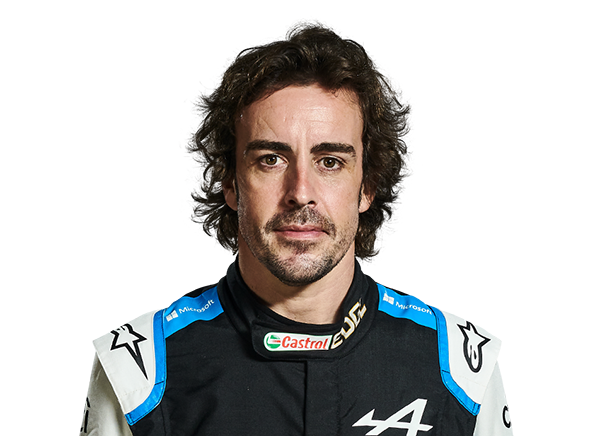
At 43 years old, Fernando Alonso continues to defy Father Time and rewrite the narrative of what constitutes a Formula One career peak. The Spanish maestro, now in his second stint with Aston Martin Aramco Formula One Team, remains one of the paddock's most formidable competitors, armed with two decades of experience and an undiminished hunger for success.
Alonso's journey from the karting circuits of Asturias to the pinnacle of motorsport reads like a masterclass in determination and raw talent. Born in Oviedo on July 29, 1981, he began his racing odyssey at the remarkably tender age of three, guided by his father's passion for the sport. His ascent through karting was nothing short of meteoric – three consecutive Spanish championships from 1994 to 1997, crowned by world karting champion honors in 1996, served notice that a special talent was emerging.
The transition to Formula One came in 2001 with the unfashionable Minardi team, where the then 19-year-old Spaniard served his apprenticeship in the sport's most demanding arena. A testing role with Renault followed in 2002, before his elevation to race driver status in 2003 marked the beginning of his transformation from promising rookie to championship contender.
What followed were the glory years that established Alonso as a generational talent. His back-to-back world championships in 2005 and 2006 with Renault didn't just break Michael Schumacher's stranglehold on the sport – they rewrote the record books. At 24 years and 58 days, he became the youngest Formula One World Champion, subsequently adding the distinction of youngest double champion. These weren't merely statistical achievements; they represented a seismic shift in Formula One's competitive landscape.
The numbers that define Alonso's career tell a story of sustained excellence across multiple eras of the sport. His tally of 32 race victories places him sixth on the all-time winners' list, while 106 podium finishes underscore his remarkable consistency at the sport's highest level. Twenty-two pole positions and 2,312 championship points accumulated across 17 seasons paint the picture of a driver who has remained competitive regardless of machinery or regulation changes.
Perhaps more telling than his victories are the championship battles that slipped away. His tenure at Ferrari from 2010 to 2014 produced some of the most compelling title fights in recent memory, with three second-place championship finishes behind Sebastian Vettel. The 2010 and 2012 campaigns, in particular, showcased Alonso's ability to extract maximum performance from cars that, on paper, shouldn't have been championship contenders. These near-misses, while painful, only enhanced his reputation as a driver capable of transcending his machinery's limitations.
Alonso's willingness to seek challenges beyond Formula One's confines has further cemented his status as a complete racing driver. His victory at the 2018 24 Hours of Le Mans on debut, alongside Kazuki Nakajima and Sébastien Buemi, demonstrated his adaptability to different racing disciplines. His pursuit of the Triple Crown of Motorsport – having already conquered Monaco and Le Mans – led him to the Indianapolis 500, where he has shown competitive pace despite the oval racing learning curve.
The McLaren years from 2015 to 2018, and again from 2007, bookended different chapters of his career. The first McLaren stint came during the team's dominant era, while the second coincided with their struggles in the hybrid era. His temporary departure from Formula One to focus on other racing series wasn't a retreat but rather a strategic pause that allowed him to maintain his competitive edge while the sport evolved.
His current chapter with Aston Martin represents something of a renaissance. The team's ambitious technical and infrastructural investments, combined with Alonso's experience and racecraft, have created an intriguing partnership. His role extends beyond that of a mere driver; he serves as a mentor, technical advisor, and standard-bearer for a team with championship aspirations.
The 'El Nano' nickname, typical for Fernando in his native Asturias, belies the larger-than-life impact he has had on Formula One. His racecraft remains as sharp as ever, his political acumen in managing race situations undiminished, and his ability to motivate teams around him as evident as it was two decades ago.
Beyond the cockpit, Alonso's role as a UNICEF Goodwill Ambassador reflects his understanding of his platform's broader responsibilities. His influence extends far beyond lap times and championship standings, inspiring a generation of Spanish drivers and fans who see in him proof that greatness can emerge from any corner of the motorsport world.

As Formula One continues its evolution, Alonso stands as both a bridge to its recent golden era and a competitor still capable of writing new chapters. His longevity isn't simply about physical fitness or mental sharpness – though he possesses both in abundance – but rather a testament to an uncompromising pursuit of excellence that defines true champions. Whether this current phase with Aston Martin yields that elusive third championship or not, Fernando Alonso has already secured his place among the sport's immortals.