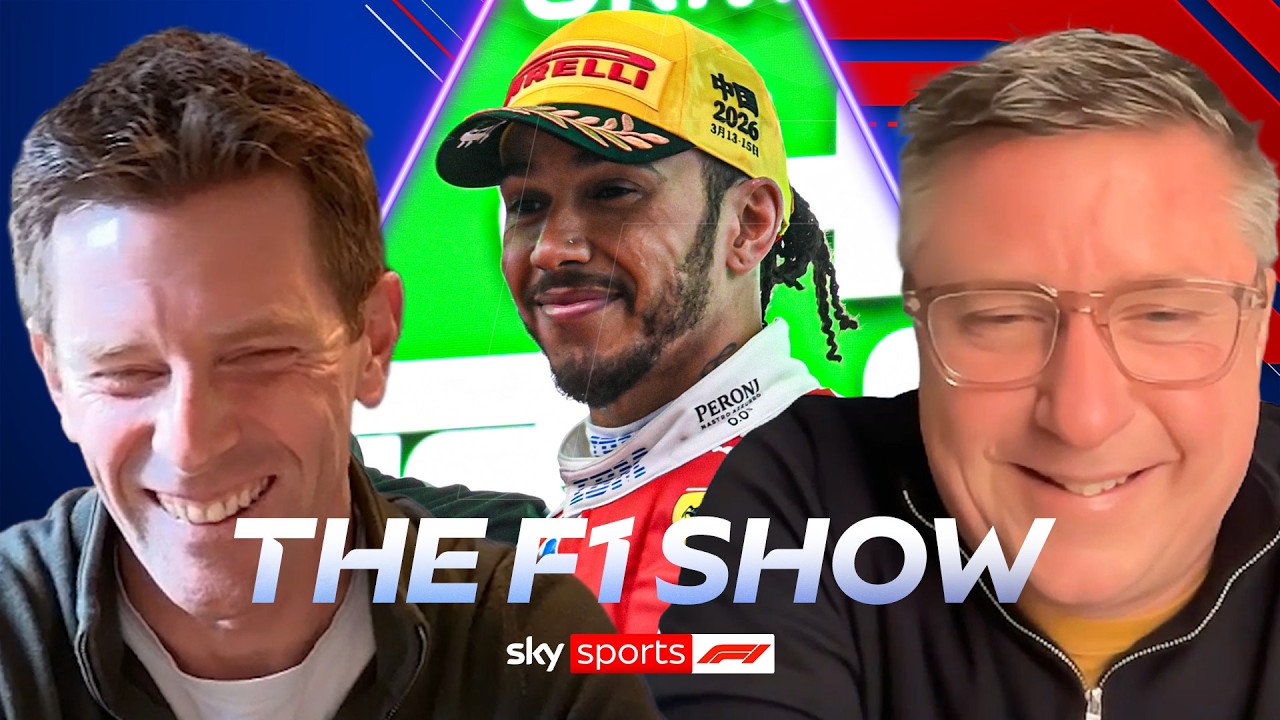
Almost a year after its summer release, the Apple-backed F1 movie has stopped being a marketing campaign and started becoming a cultural artefact for the sport. David Croft, Sky Sports F1's lead commentator, is comfortable saying it out loud.
Speaking on Sky Sports F1 during the 2026 season's opening rounds, Croft reflected on a film that has now picked up both an Oscar and a BAFTA — and, in commercial terms, sits as the highest-grossing sports movie ever produced.
"I think it is amazing for Formula 1 that not only was a movie made that became the highest-grossing sports movie of all time, but has picked up a BAFTA and an Oscar as well," Croft said. "This has done so much good for the sport that we love, has introduced us to new audiences, and has potentially given us a sequel as well."
The Oscar in question came in a technical category — sound — but it's a category in which the on-track audio leaned heavily on real F1 broadcast assets. Croft's commentary, alongside Martin Brundle's, was layered into the film's racing scenes, meaning both Sky men can technically claim a small share in the Academy's nod for the film's audio mix.
For F1's commercial team, the awards run is the perfect capstone to a 12-month stretch in which 'Drive to Survive' fatigue had begun showing up as a real concern. The film did exactly what the Netflix series, by its tenth season, had stopped doing reliably — it broadened the audience again, especially in markets where F1's growth had stalled. US, Brazil, and India all out-performed initial theatrical projections.
The sequel reference Croft made is the headline detail. Apple has not formally confirmed a follow-up, but the economics — over $1.4 billion in global box office plus the awards-season halo — make a continuation difficult to walk away from. Industry whispers have, for months, suggested pre-development is already running, with the storyline expected to lean into a championship-fight arc rather than the underdog comeback the original used as its spine.
For the sport itself, the audience growth is the asset. The original film opened the door to viewers who didn't know what a Q3 lap looked like and ended up booking grandstand tickets. Croft, who has called Grands Prix for two decades, knows the difference between fans who arrive via highlights and fans who arrive via cinema.

"It has introduced us to new audiences," he said.
It is, in one short line, what Liberty Media most wants on a slide. The next round of broadcast and ticketing negotiations will lean directly on the audience expansion the movie kicked off. The Oscar and BAFTA do not, on their own, sell race tickets — but they extend Liberty's pitch that Formula 1 is no longer just a sport, it's a piece of mainstream entertainment infrastructure.
The attention now turns to whether the sequel materialises in time to ride the 2026 regulation reset, the new Cadillac entry, and what is rapidly becoming F1's deepest driver bench in a generation. If it does, Croft and Brundle's voices may yet end up on another awards reel.