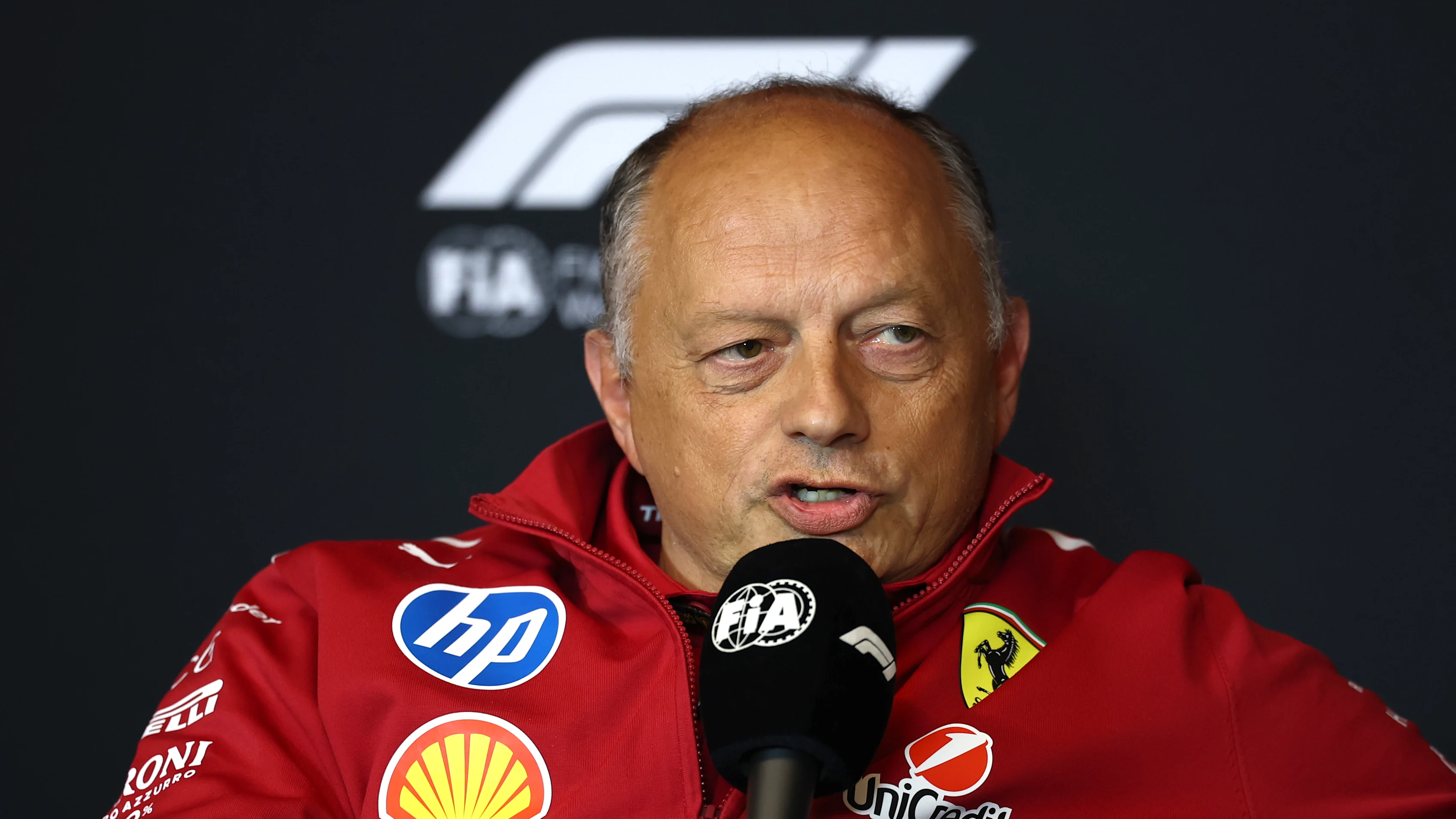
Fred Vasseur has given Ferrari-watchers a clear look at the Scuderia's 2026 strategy, and it revolves around a regulation most fans have never heard of. The Frenchman has essentially confirmed that Ferrari's combustion development is on hold until the team triggers the FIA's Additional Design and Upgrade (ADO) clause, a rule that hands extra tokens and mid-season engine development to manufacturers who fall between 2 and 4 per cent behind the leading power unit.
In plain language, Vasseur is betting on a rule rather than on an internal breakthrough — and he has now said so in as many words.
"We have to be lucid," he told reporters after the Chinese Grand Prix. "It's a good weekend overall, but we are still far away of the Merc. We have still four, five, ten [tenths], and it's a lot. But we are not working only on the power unit, we are working everywhere. On the power unit, it's a bit more difficult because — until the ADO — it's frozen."
The decisive phrase is "until the ADO." Vasseur is publicly acknowledging that Ferrari's engine is frozen for meaningful gains right now and that the team's plan hinges on the FIA's catch-up mechanism activating mid-season. That framing has strategic consequences. It tells every rival that Ferrari believes its engine is more than 2 per cent behind Mercedes. It also tells Maranello's chassis team that they are cleared to push on aero, suspension and cooling without being asked to chase lap time the engine cannot deliver.
The Macarena rear wing — Ferrari's already-notorious 180-degree rotating aero device — fits that logic neatly. It is a hardware solution to an engine problem: claw back straight-line speed through aerodynamics while waiting for the regulatory thaw on combustion.
Analysts who have parsed Vasseur's comments argue the approach is cold and rational, but not without cost. Publicly signalling that you expect to qualify for ADO is also publicly signalling that your engine is underperforming, which is awkward for internal morale and potentially uncomfortable for fuel and oil partners whose technology is tied to the unit.
But Ferrari has clearly decided the alternative — staying silent and doing nothing strategic about the gap to Mercedes — is worse. Instead, Vasseur has placed the team on a path that lets the chassis programme run unconstrained while the engine holds station, waiting for the ADO window to open.

It is a very modern piece of F1 politics. If Vasseur's reading of the regulations is correct, Ferrari's real fightback does not begin on a Saturday in Bahrain or a Sunday in Melbourne. It begins the moment ADO is officially triggered — and his chassis team has spent every intervening race preparing the package that can make the most of it.