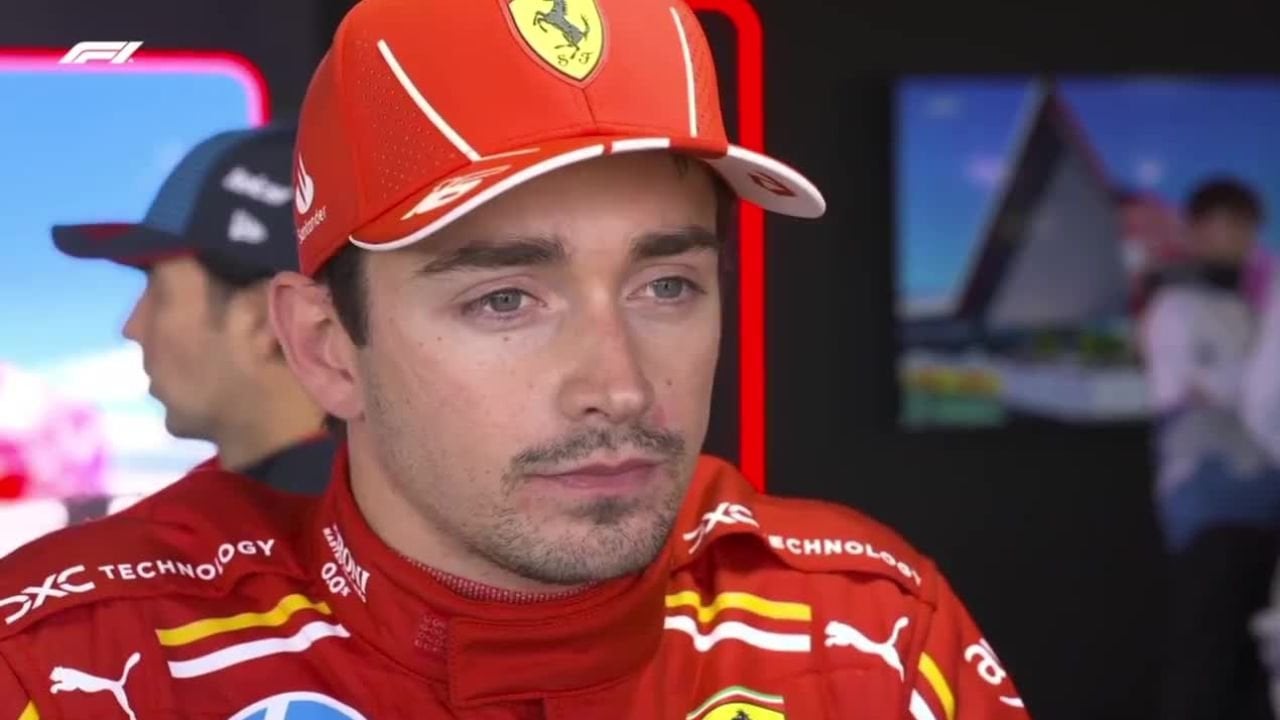
If Maranello had wanted a clean test of its biggest 2026 upgrade, Miami should have provided it. Instead it produced a result Ferrari will spend the lead-up to Canada trying to explain.
Ferrari declared more new parts to the FIA than any other top team in Florida — a package that touched the front, the floor and the rear of the SF-26. The early signs were promising. Charles Leclerc launched cleanly, sailed around the outside through turn one and forced Kimi Antonelli and Max Verstappen into matching lock-ups. By lap 16 he was still inside a second of the eventual race winner.
From there the race quietly drifted away from him.
By the chequered flag Leclerc was more than 20 seconds behind Antonelli and Lando Norris. His desperate late-race chase of Oscar Piastri for the final podium spot ended on the wall. The damaged Ferrari fell to sixth on the road and then to eighth after a 22-second penalty for repeatedly cutting corners as he wrestled the broken car home.
Leclerc's own diagnosis cut to the issue. He described "massive degradation" on the medium tyre and added that even the harder compound never gave him the comfort he had felt in the previous day's sprint.
That sentence is the one Ferrari has to deal with. The Monégasque was emphatic that the upgrade itself worked — meaning the new parts produced the gains on the rig and on the track that Maranello had targeted. If both can be true, the bottleneck must lie elsewhere. Tyre management, set-up window, balance through long runs — somewhere the SF-26 keeps ceding ground after Saturday.
Miami also crystallised an early-season pattern. The team has consistently been stronger in qualifying than in the race. Australia, China and Japan all hinted at it. Miami made it the loudest part of the weekend.
The pain is sharper because rivals did not stand still. Mercedes brought only minor parts and still won. McLaren brought a heavy package and Norris was within striking distance until the pit-stop sequence handed track position to Antonelli. Red Bull, of all teams, found a leap in performance with its own Miami upgrade and put Verstappen on the front row of the grid.
Ferrari, meanwhile, brought the most and went backwards. That is the kind of weekend that triggers internal post-mortems even at a team running well in the constructors' standings.
Leclerc's read is that Miami was not a pattern of races slipping away from him. The numbers, for now, push back. Until Sundays start matching Saturdays, the largest declared upgrade in the pit lane will keep being read as the most uncomfortable footnote on the SF-26.
Next up is Canada — a circuit whose stop-start, energy-sensitive layout has historically rewarded teams with strong long-run pace and punished those that lose tyre temperature management. Ferrari has weeks to find what its Miami parts did not.

This is a reworded write-up of analysis published originally at newsformula.one.