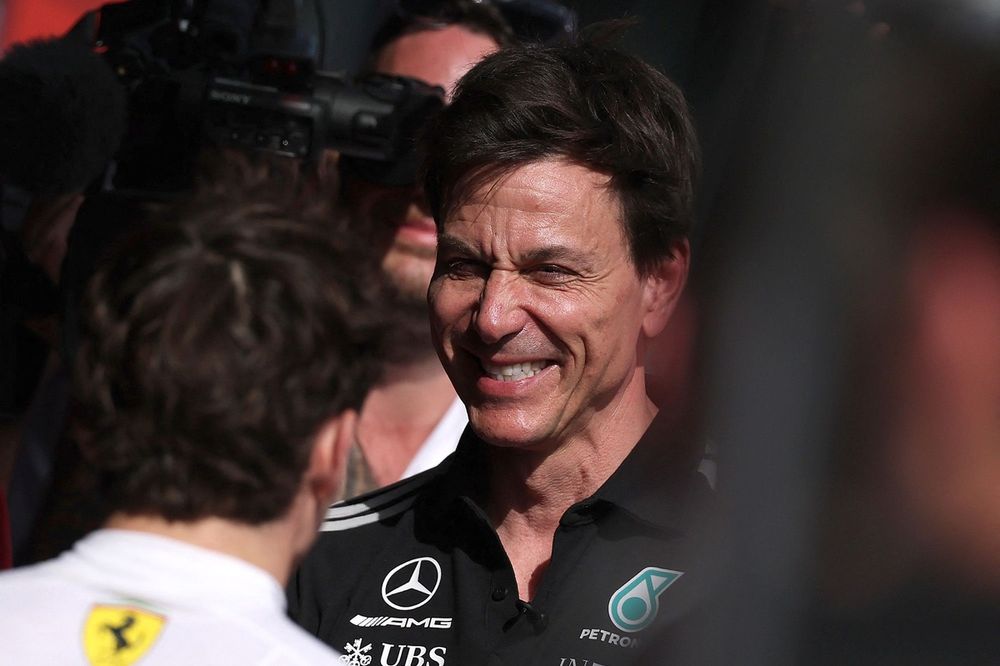
Lewis Hamilton has shifted register on Ferrari's 2026 problems. After weeks of carefully framed answers about process, learning and trajectory, the seven-time champion stood in the Suzuka media pen and said something senior F1 figures rarely say out loud: a rival has the better engine, and Ferrari are behind because of it.
The context made the admission heavier. Hamilton joined Ferrari to chase his eighth title under a new regulation set he believed would re-shuffle the deck. Instead, he is now publicly endorsing the consensus that the deck has been re-shuffled — but in McLaren's favour, on the back of a Mercedes power unit Brixworth has already optimised for the new hybrid balance.
"I don't know whether or not we can turn it into a podium, but I mean our race pace has been pretty decent," Hamilton told reporters. "It looks like McLaren have taken a step forward. Naturally, they've got the Mercedes engine, which is a long way ahead of us at the moment. And we've got a huge amount of work [to do]."

A former insider's view
For more than a decade as a Mercedes driver, Hamilton was the one benefiting from the Brixworth advantage. That experience gives his Suzuka comments a credibility that any other Ferrari driver's would lack: he knows what a class-leading Mercedes power unit feels like, and he is saying — without dressing it up — that McLaren now have it.
It is also a precise diagnosis of where the gap sits. Hamilton was clear that Ferrari's race pace had been "pretty decent." The chassis is not the headline problem. The engine is — and that is a much harder fix under the 2026 development restrictions, where power-unit upgrades are tightly capped.
Managing expectations, naming the deficit

Hamilton's framing also did something more political. By naming the deficit publicly, he reset the standard against which the rest of his Ferrari debut season will be judged. Podiums in the early flyaways were never realistic; saying so now removes any pretence otherwise and turns Ferrari's narrative into one of measured rebuilding rather than missed targets.
For Maranello, the path forward is narrow and well-defined. Power-unit progress under the current rules has to come from combustion-side gains, deployment-software refinement and the small-margin tuning that defines this era of Formula 1 engineering. None of it produces overnight headlines.
The FIA factor
Hamilton's comment also drops directly into the midseason regulation conversation already heating up ahead of Miami. The governing body's planned tweaks — boost ceilings, deployment transparency, driver-side safety adjustments — were not designed as engine-equalisation measures. But after a public admission of this weight from a seven-time champion, the politics around any change to the engine rules will be louder.
Whether that pressure produces real movement is the next question. What is no longer in doubt is Ferrari's diagnosis — Hamilton has put it in writing, and on camera, himself.