James Hinchcliffe has drawn the line for George Russell's 2026 title campaign in a single sentence on F1 Nation: if Kimi Antonelli wins in Canada too, the conversation inside Mercedes stops being about a fast teammate and starts being about a structural problem.
The ex-IndyCar driver, now a regular F1 broadcaster, delivered the assessment on the official Formula 1 podcast in the days leading up to the Canadian Grand Prix on May 22–24. The setting matters. Russell won in Montreal last season. The Mercedes engineering team has historically pointed at Canada as a Russell circuit — the kind of layout where his preferred driving style and the strengths of the car align tightly. That made it the natural place for the more experienced of the two Mercedes drivers to push back against the current narrative.
Hinchcliffe's point is that the rope of track-specific excuses has effectively run out.
"If we go to Canada in two weeks' time, three weeks' time, whatever it is, and all of a sudden Kimi's ahead again, that's I think when the 63 side of the garage needs to start, maybe not panicking, but really coming up with a plan," Hinchcliffe said. "Maybe changing their approach a little bit, trying to find what you have to do to not just slow him down, but speed yourself up."
The final clause is the substantive one. "Slow him down" is the polite description for the political levers a team can pull internally — pit-stop priority, run-plan order, tyre allocations, engineer scheduling. "Speed yourself up" is the harder option: accepting that the problem is the driver's delivery against the car, and going to work on it. Hinchcliffe is making clear that he expects the second to be unavoidable if Canada goes the wrong way.
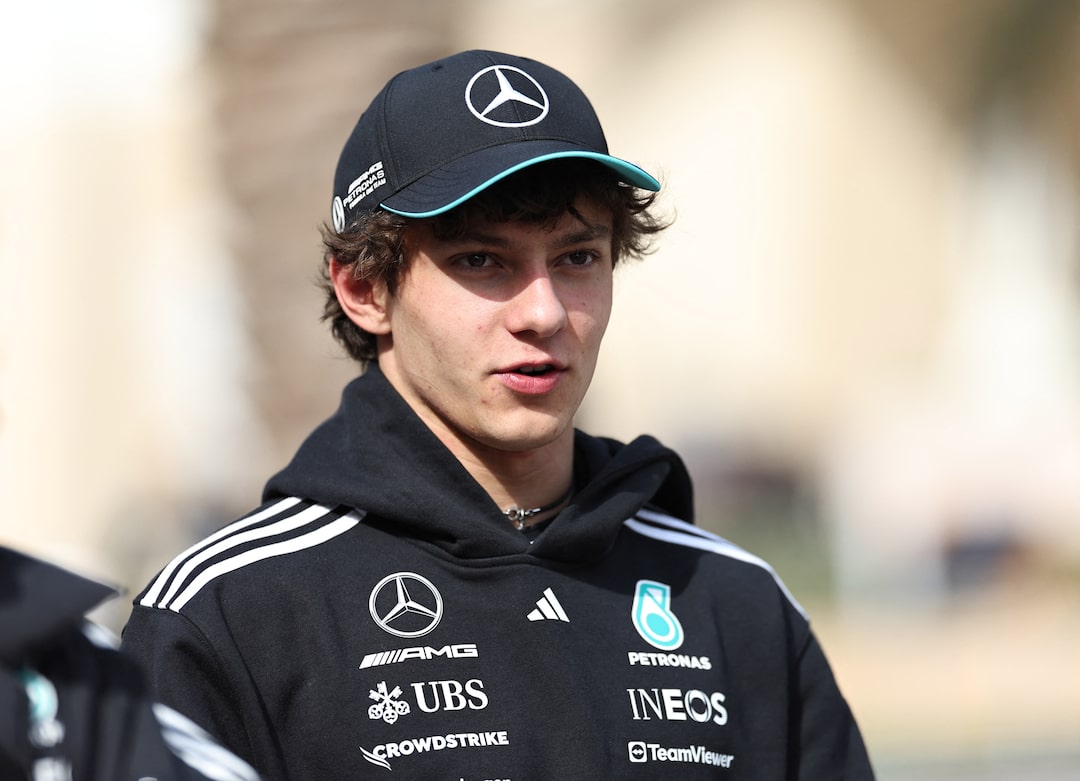
The arithmetic is unforgiving. Antonelli arrived in Miami already 20 points clear in the standings, then converted his third consecutive pole into his third consecutive race win — the first driver in F1 history to convert his first three pole positions into race victories. He is doing it in his second F1 season, at 19, against a teammate who was being briefed as Mercedes' natural title contender right up to the start of pre-season.
From the other side of the garage, two-time world champion Emerson Fittipaldi has added a separate warning aimed at Mercedes itself. Speaking on the official Beyond the Grid podcast, the Brazilian — who took over as Lotus's number one driver in 1970 after three race starts, following the death of Jochen Rindt at Monza, and was world champion two years later — was clear about what he believes Antonelli needs.
"I think Kimi Antonelli, if he really has the support, full support, from Mercedes, from Toto, he can succeed," Fittipaldi said. "He has to feel these people behind him supporting him on the world championship."
The historical resonance Fittipaldi carries when he says it is part of why the comment lands. He lived precisely this scenario: a very young driver, suddenly thrust into team-leader status, who needed his team to make the call to back him without reservation. If Antonelli becomes Italy's first world champion since Alberto Ascari in 1953, the way Mercedes handles the next twelve months will be the story.
For now, the question on Hinchcliffe's terms is simple. Russell wins in Canada and the panicked version of this story dies. Russell does not win — and the alarm bells he warned about start ringing on schedule.