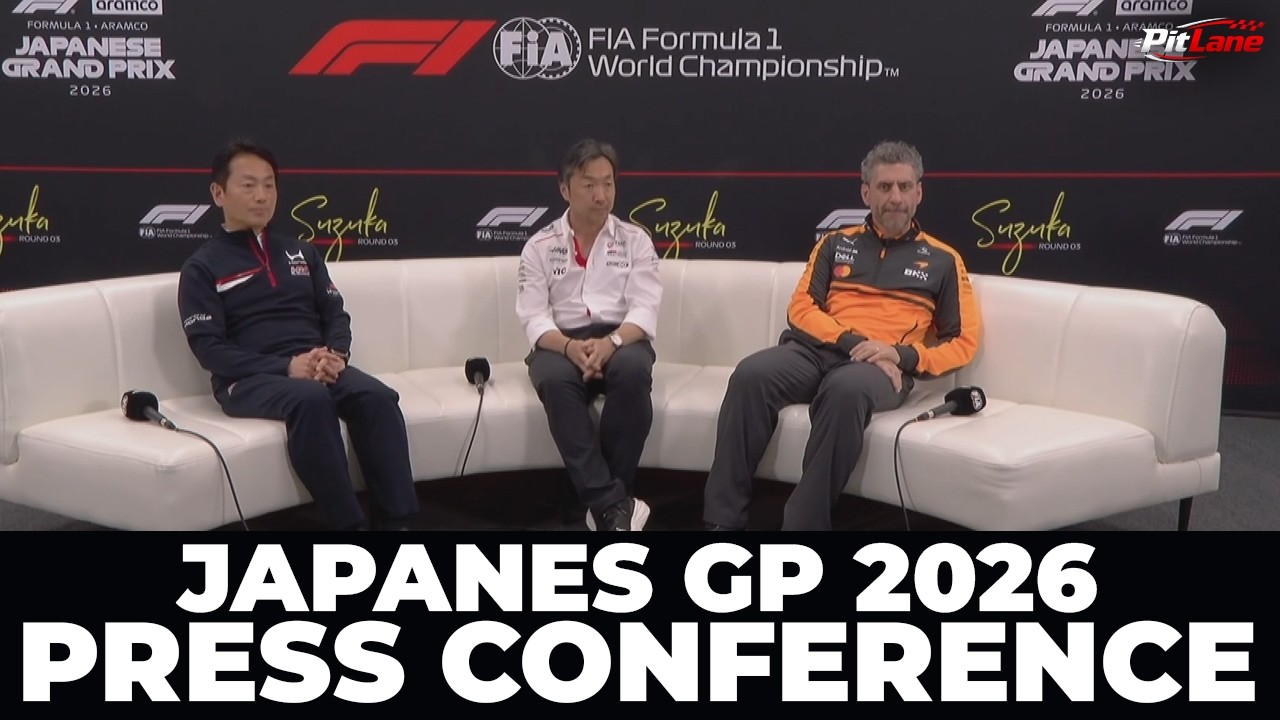
Honda's first full-works Formula 1 season since 2008 was never going to be seamless. But the public explanation delivered at the Suzuka team principals' press conference, by Honda Racing Corporation president Koji Watanabe, was remarkable for how specifically it diagnosed the deficit.
Asked for the reasons behind Honda's slow start to the 2026 regulations, Watanabe did not resort to boilerplate. "I believe that there are several reasons," he said. "And the first one is that a new power regulation is quite challenging for us. The second one is that we stopped the Formula 1 activities at the end of 2021 and announced to return to Formula 1 in 2023. So there are some period during which our Formula 1 activity was quite limited."
Honda's rivals — Mercedes High Performance Powertrains, Ferrari and the returning Audi programme — spent the pre-2026 window doing what Honda was not doing. They ran parallel development streams on their existing turbo hybrids while preparing the all-new 2026 architecture in the same building. Honda spent part of that window as an officially absent manufacturer, technically supplying Red Bull Powertrains but no longer committing factory resource to a full F1 programme.
The 2026 regulations make that gap expensive. A 50:50 power split between combustion and electrical energy, new energy storage and deployment rules, and radically different aero efficiency requirements mean every unit of development time lost compounds.
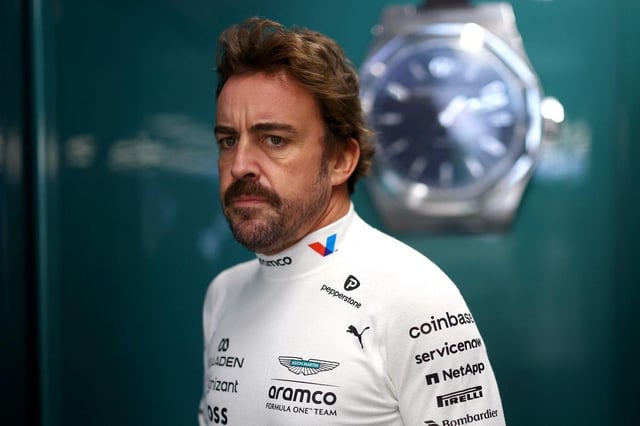
Aston Martin, Honda's works partner, has so far been unable to offset the power unit deficit with chassis gains. Fernando Alonso and Lance Stroll have both described deployment limitations during races; the team's deployment issues are one of the most-quoted weaknesses in the paddock pitwall gossip.
Watanabe's answer is both a confession and a claim. By framing Honda's deficit as missing time rather than missing engineering insight, he is signalling that the recovery is a matter of running hours and data — not architectural re-thinks. For Honda's Japanese fanbase, many of whom still wear the Red Bull blue of the Verstappen era, it is a message that Suzuka is not the ceiling.
"During that period our Formula 1 activity was quite limited," Watanabe said again, a repetition rather than a new point, and clearly by design.
It is the kind of admission that tends to frame the rest of a season. If Honda closes the gap through 2026, the press conference line will be remembered as the moment the manufacturer drew the baseline. If it does not, it will be remembered as the moment Honda told the grid the problem was bigger than it had previously let on. Either way, at its home race, the company decided the paddock should hear it in its own words.