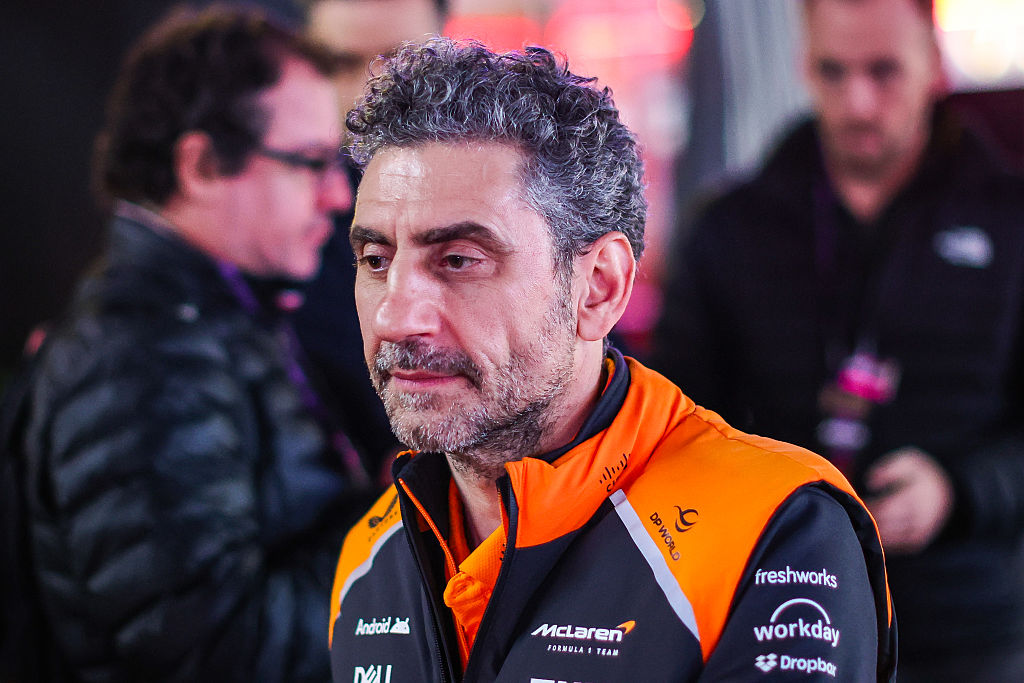
Every political movement needs a figurehead. F1's emergency push to amend the 2026 regulations has quietly found one, and he runs the team leading the constructors' championship.
Andrea Stella has spent the first three rounds of the season positioning himself as the paddock's most institutional voice on 2026 safety. Where other team principals have tiptoed around criticising a regulation they helped shape, the McLaren boss has been direct and repetitive. The speed-differential problem, he has told anyone who will listen, needs urgent attention before a serious accident.
His targeting has been deliberate. Stella has not aimed at Red Bull or Ferrari. He has aimed at the FIA. And he started before the Bearman Suzuka crash that dramatised the issue — a crucial detail that distinguishes him from team principals who are now reacting to events.
The numbers underpinning his campaign are uncomplicated. Cars running electric deployment can hold up to a 50km/h advantage over cars in energy-save mode. That is the differential that caught out Ollie Bearman at 50G in Japan, and it is the same differential every driver and engineer on the grid cites privately when asked what frightens them about the current cars. Stella has refused to allow that fear to stay a private one.
Team principal politics amplifies the effect. Ferrari's Fred Vasseur is playing a cautious game. Red Bull's Laurent Mekies is new and focused on Verstappen's form. Mercedes are sitting on a regulatory advantage they are not minded to legislate away. That vacuum of public leadership falls on Stella — whose McLaren team, incidentally, is already winning much of the paddock's hardware argument on merit.
The public push has been coupled with private work. Reporting from THE RACE indicates the FIA has been assembling a package of six proposed technical changes for 2026. That package covers deployment algorithms, closing-speed safety, qualifying exploits and battery-harvest windows. Multiple items track directly back to concerns Stella has raised on the record.
Drivers have reinforced him. Lando Norris has made it politically impossible for McLaren to stay quiet about the current regulations. The principal's public stance provides his driver with cover and channels Norris' frustration into a structured political push rather than an individual gripe. Around that nucleus, Sainz on street-circuit safety and Leclerc on algorithm quirks are now reinforcing the same narrative.
The downside for Stella is positional. He risks being branded the 2026 regulations' chief critic at the exact moment his team is leading the championship. Detractors can paint him as a principal causing trouble from a position of comfort. Stella appears unconcerned. His calculus is that a catastrophic crash at Baku, Singapore or Jeddah ends this conversation in the worst possible way. Better to lead the reform than to own the aftermath.
The FIA meeting before Miami will test whether Stella's public voice has private votes behind it. If the package of emergency fixes passes — which is what most paddock insiders expect — the story of how the 2026 regulations were rescued will begin not with a driver, but with a team principal who refused to stop using the word 'urgent'.