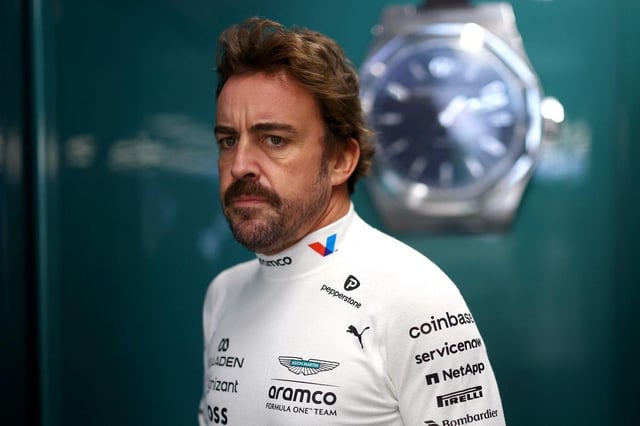
Aston Martin's 2026 campaign, measured in points, has been a disaster. Measured in intellectual influence, it may be the most important car on the grid. That is the central argument emerging from F1's technical analyst class — and it is one that challenges how the sport evaluates a programme whose Adrian Newey-influenced chassis has already reshaped rival engineering conversations despite finishing nowhere near the front.
The case was made openly in F1 TV's Tech Talk from Suzuka, where the show's technical analyst pushed back on the assumption that last place in the constructors' standings equates to being out of the conversation. "But don't rule out Aston Martin," the analyst said. "This car is incredibly intricate and incredibly detailed, and has loads of really innovative features coming along. And Adrian Newey is — well, it's fair to say he's pretty good at designing racing cars, isn't it? Even if this car isn't near the front, it doesn't mean that the front of this car isn't near the front of all the other engineers' minds — because there are some interesting details on it."
What the analyst did not spell out explicitly, but implied, is that the AMR26 is being treated in the engineering paddock less as a current-year product and more as a set of design precedents for 2027 and beyond. Concepts around active aerodynamics, floor fence geometry and the packaging of the team's Honda power unit have all been the subject of extended technical dissection in specialist podcasts and paddock forums. Rival aerodynamicists describe the car as beautifully resolved — even as they acknowledge that beauty is not currently translating into lap time.
There is a historical precedent for the Newey paradox. The English designer has repeatedly produced cars whose concept took a full season — sometimes longer — to properly understand and exploit. Williams' FW14B needed a season of development to become the most dominant car of its generation. Red Bull's RB5 was modest for half a year before becoming the foundation of a multi-championship dynasty. McLaren's MP4-20 produced only one title despite arguably being its era's best car. The pattern is that Newey cars often reward patience — which Aston Martin, with its deep Stroll-funded budget and its 2026 expectations already destroyed, now has an abundance of.
The near-term problem is real, however. Honda's 2026 power unit is understood to be exhibiting a vibration signature that is interfering with Aston Martin's battery deployment and energy recovery systems. In a regulation package that has made battery management the decisive performance factor, an unstable energy unit is a far more damaging problem than, for example, an aerodynamic deficit. The chassis also began the season materially overweight, a problem that has demanded mid-season stripping and compromised development bandwidth.
None of those issues, however, are the point rival engineers are focused on. The AMR26's underlying concept — what the car is trying to achieve aerodynamically, and the packaging compromises that concept has forced — is the artefact the paddock is mining for insight. If Newey's concept is directionally correct, and Aston Martin can fix its Honda-integration problem for 2027, the team's 2026 results will, in hindsight, look less like failure and more like the painful first iteration of a multi-year project.
Newey's own role will determine how much of that potential is actually realised. The designer stepped back from team principal duties at Aston Martin earlier this year, a move that has triggered wide-ranging speculation about the team's leadership model. But internal sources describe his involvement in the 2027 chassis programme as active, deep and central — and they insist his original mandate was never to win in 2026 at all. It was to lay a foundation.
For Aston Martin's supporters, that framing offers cold comfort against a backdrop of weekend-after-weekend Q1 eliminations. For Formula 1 more broadly, it raises a more interesting question: if the most studied car of 2026 is the one finishing last, what does that say about how the sport evaluates success — and whether its competitive order is ever quite what it appears to be?
Newey's answer, as ever, will come on track. Just not this year.