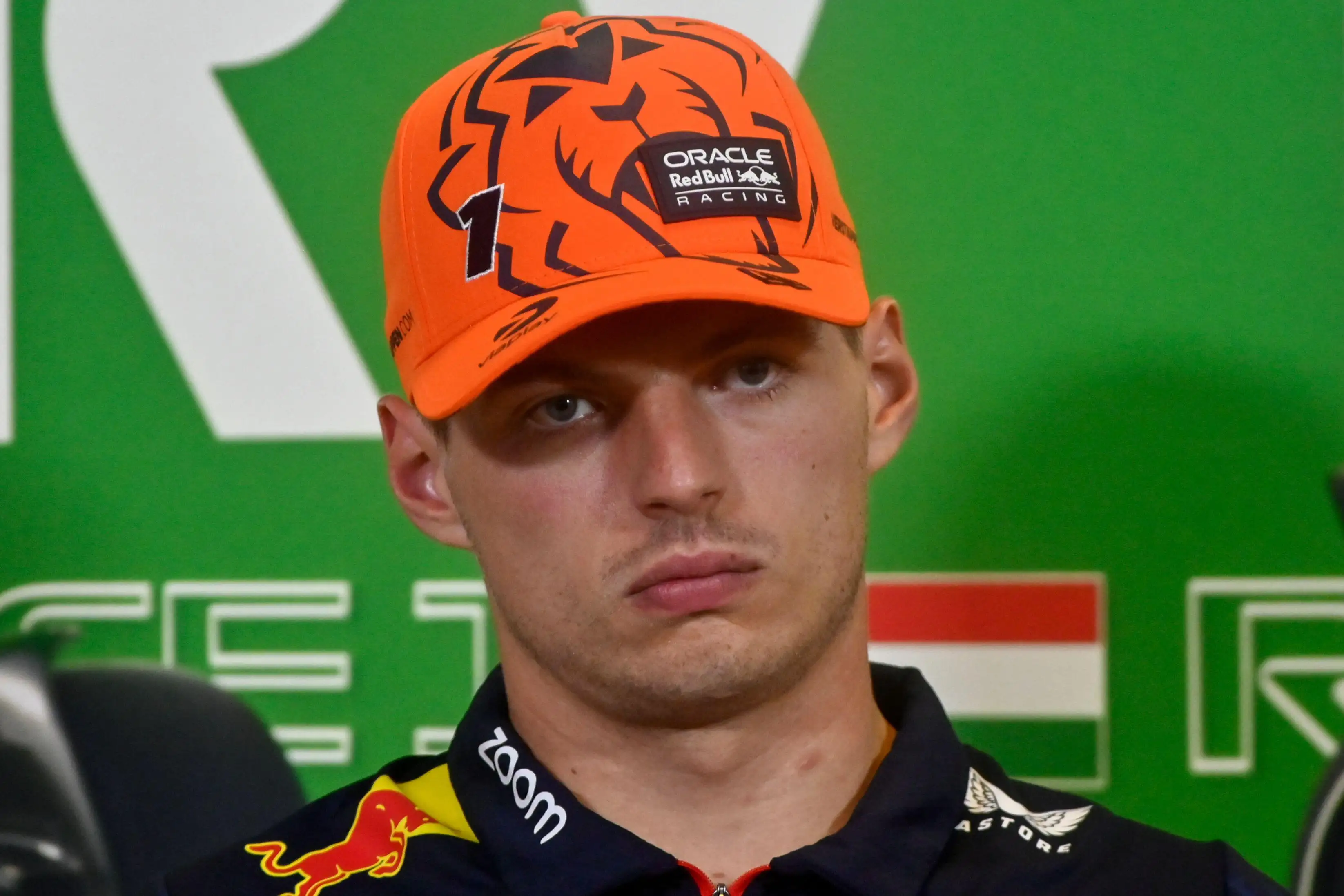
Max Verstappen does not normally use a press conference to relitigate his car. He prefers to take the steering wheel as the answer to most questions. At Suzuka, however, the four-time World Champion broke pattern and gave one of the bluntest team-internal diagnoses heard from a reigning champion in years.
"I think we have bigger problems than what we had last year," Verstappen said after qualifying. "Some parts of the car at the moment are not working how we want them to work."
That sentence, said in the language of a driver who picks his words carefully, has more weight than a paragraph of paddock speculation. Red Bull entered the 2026 era as the reigning champions and walked into Suzuka behind both Mercedes and a McLaren benefiting from what Lewis Hamilton has openly called a Mercedes power-unit advantage. On Verstappen's reading, the 2026 car is the worse one.
Friday already told the story
The diagnosis began the day before. Friday at Suzuka left Verstappen searching for a car that flipped between two opposites across the day's two practice sessions.
"Yeah, not very good, to be honest," he said after practice. "Just lacking balance, grip — two opposites from FP1 to FP2, and both of them not very good. So from our side, a lot of work to be done to also understand why we're having these big problems at the moment."
For a driver whose competitive identity is built on extracting precise rear-end behaviour, lacking balance in opposite directions across two sessions is not a setup-tweak problem. It points to something deeper in the way the new aero platform and the 2026 power unit are interacting on a circuit Verstappen knows as well as any in the calendar.
No miracles
Asked whether Red Bull could engineer their way back into the front-running fight across the weekend itself, Verstappen lowered the temperature instead of raising it.
"It's very difficult to solve at the moment," he said. "So I don't expect miracles overnight. We just need to understand our issues a bit more — you know, why, where they are, where they are coming from."
That phrasing matters. Red Bull's strategy team has been operating under the assumption that targeted upgrades — most recently a chassis package due before Miami — will progressively unlock the car. Verstappen's framing is colder: the team needs to understand the problem before it can fix it, and the answer is not yet on the dyno.
A championship narrative shifting
The wider implication is the most consequential. With Antonelli leading the championship, Mercedes leading the constructors', and McLaren cited as the engine benchmark by Hamilton himself, Red Bull are no longer dictating the development agenda. They are responding to it, while still searching for the real root cause of the deficit.
Verstappen has spent the early flyaways alternating between blunt frustration and pointed silence. At Suzuka, he chose blunt. Whether Red Bull's response — at the factory and on the track — matches the honesty of his diagnosis will define what the rest of his 2026 looks like.