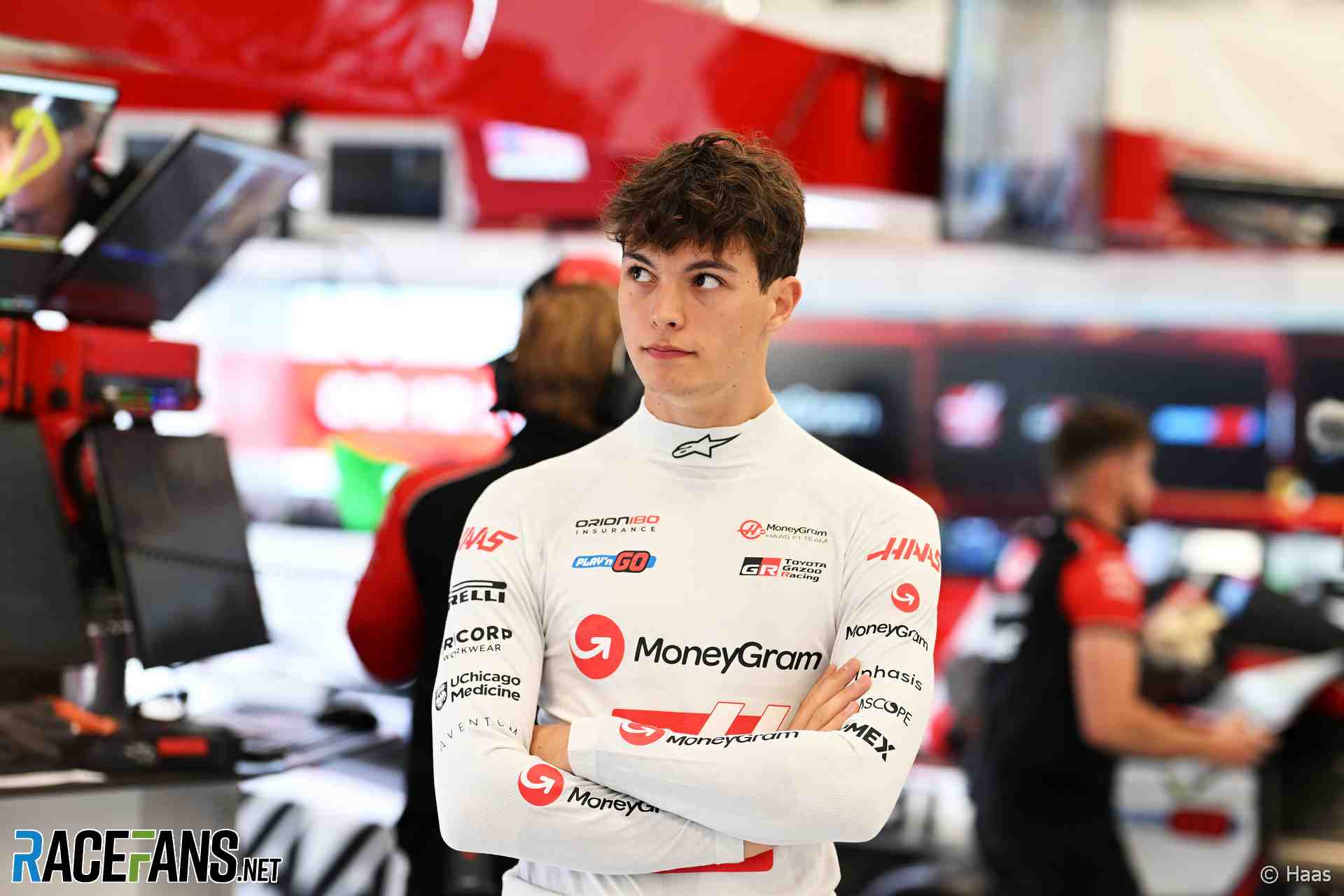
Oliver Bearman climbed out of his wrecked Haas at Suzuka, hauling himself slowly over the side of the cockpit, in front of a television audience that knew immediately what it had just watched. The 50G impact was the largest in the early 2026 season. The closing-speed delta that caused it had been a number on FIA spreadsheets for six months — and a worry on team principal whiteboards for longer.
Streamer and F1 commentator Kr1s called it in the moment. 'OH MY GOD. NO. Ollie's in the wall. Ollie. Bearman's in the wall. Bam's out. Oh, that's safety guard. It's got to be a safety car,' he said as the replay aired. 'Oh, Ollie's limp. Oh no.' His next instinct, when the safety car had been deployed and the dust had settled, was to point straight at the regulation set everybody had been warning about.
'This is the speed overlap everyone's been talking about,' Kr1s continued. 'This is the first crash we have because of someone harvesting. There you go. Regulations for you. It was just a matter of time.'
The mechanics are simple to explain. Under the 2026 power-unit rules, a car deploying its electrical energy on a straight can be travelling 50 to 60km/h faster than one harvesting it on the same stretch of asphalt. Colapinto, on the data Alpine has shared with the FIA, was the slower of the two in this case — about 60km/h down on the cars around him because his car was in a harvesting phase. Bearman, accelerating into the same braking zone, could not slow enough to avoid the contact.
The narrative could have stopped at driver error, with Colapinto carrying the blame for being where he was. It did not. Haas team principal Al Kamatso, whose own driver had just had his afternoon ended in a hospital ride, took the unusual step of publicly clearing the Alpine man. Both Haas and the FIA's preliminary investigation reached the same conclusion: the closing-speed differential was the systemic issue and Colapinto was not to blame.
What has frustrated the senior end of the grid is the FIA's response. Multiple paddock briefings since Suzuka indicate that the regulator is preparing tweaks for Imola and Canada, but the top item on the to-do list is qualifying procedure rather than the closing-speed problem that put Bearman in hospital. McLaren team principal Andrea Stella, who had raised closing-speed concerns during the Bahrain pre-season test and been brushed off, has since pushed publicly for the FIA to flip its priorities. His argument is that a closing-speed delta that produces a 50G impact in a race is a more urgent safety issue than a closing-speed delta that produces an awkward yellow flag in qualifying.
The FIA, more measured in public, has acknowledged that high closing speeds contributed to the severity of the impact but warned that any commitment to specific regulation changes would be premature. In paddock translation: the next stage of the 2026 review will look at the issue, without a guaranteed fix.
That position has done little to settle the drivers. Several have admitted privately to spending the energy-harvesting sections of every straight scanning their mirrors instead of focusing on their own lap. Canada — a power-unit-sensitive circuit with the longest harvesting straights of the early calendar — will be the next test. For Bearman, the headline is that he walked away. A 50G impact a decade ago would have ended a career, let alone a race. The car saved him, and Haas's preparation paid off. For everyone else watching, the question is whether the regulation will be allowed to keep producing the same impact data point.