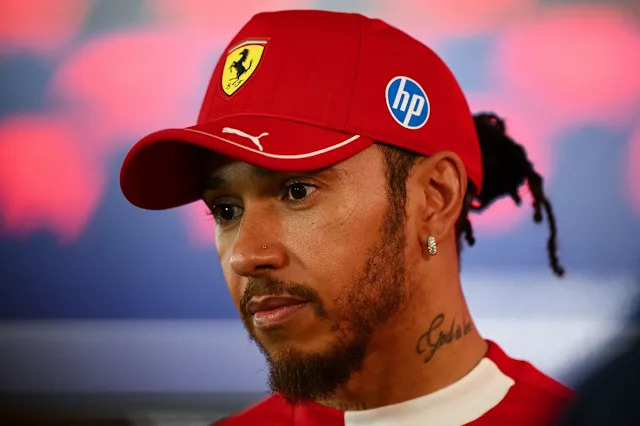
Nico Rosberg knows the difference between a hungry Lewis Hamilton and a hollow one. Four full seasons sharing a Mercedes garage, a 2016 title fight that produced one of the rawest team-mate rivalries in modern F1 history, and a five-day-later retirement give him standing the rest of the punditry world simply does not have. Rosberg now wants the paddock to know that the Hamilton he sees in red is the dangerous one.
Speaking on his own podcast and on Sky Germany, Rosberg has been increasingly forceful in arguing that Hamilton's 2026 form swing is not a flicker. His reporting is not built on body language read off a TV broadcast. Rosberg is openly drawing on his close friendship with Ferrari team principal Fred Vasseur, and he has effectively been operating as Hamilton's advocate-in-chief through the opening four rounds.
The heart of the case is design ownership. Vasseur has been blunt in confirming that Hamilton, during the second half of 2025, set up direct meetings at the Ferrari factory with chairman John Elkann, chief executive Benedetto Vigna and chassis design chief Loic Serra. He arrived with written documents proposing specific suspension and balance changes. Those documents, according to Vasseur, ended up shaping the SF26's final platform.
'When the team sits down with the drivers in June and the driver gives specific feedback that shows up in the final car, the driver approaches the season with a completely different level of trust', Vasseur explained ahead of the Miami weekend.
The 16-month podium drought ended in Shanghai with a third place that produced perhaps the most telling sentence of Hamilton's Ferrari era so far. He described the race as 'one of the most fun I've had since battling Nico in Bahrain in 2014', a deliberate reach back to the moment that defined his Mercedes rivalry to describe how a midfield Ferrari fight made him feel.
Miami muddied the picture. Hamilton qualified sixth, finished sixth on track, was promoted to fifth via a Leclerc penalty, and called the race 'a long afternoon in no man's land' after first-lap contact with Franco Colapinto damaged his floor. He raised the same battery-deployment complaint he had flagged in Japan and China.
The qualifying numbers cut against the gloom. Across 2025, Hamilton averaged 0.250s a lap slower than Charles Leclerc in qualifying. Through the first four 2026 events, that gap has flipped to roughly 0.017s in Hamilton's favour. The four-event sample is small. The direction is unambiguous.

For Rosberg, that direction is what teams should worry about. Hamilton spent long winter stretches at Maranello signing off on suspension feel and steering response. He himself wrote on Christmas Day 2025 that he had 'forgotten who I was for a moment, but that's gone for good'. Rosberg's reading, sourced direct from the Ferrari principal's office, is that those words and the qualifying numbers are pointing at the same conclusion. If he is right, Mercedes and McLaren still have one more title problem to solve in 2026, and his name is Lewis Hamilton.