Gary Anderson does not need a wind tunnel to make his case. The former Jordan, Stewart and Jaguar technical director has spent the past few weeks staring at the public 2026 power-unit specification, and his column for The Race on Saturday was a single, withering question: who, exactly, thought a 50/50 hybrid split was achievable in the first place?
'The question I would ask is when Formula 1's 2026 regulations were put in place, how did anyone think that they could get anywhere near a 50/50 hybrid power split,' Anderson wrote.
His arithmetic, presented step-by-step in the column, is awkward reading for the FIA. The 350kW MGU-K mandated by the regulations can sustain its peak deployment for roughly 11.5 seconds before the battery starts running out. That would be fine if the cars only needed full power for 11.5 seconds a lap. They need it for closer to 60 per cent of the lap. The recovery side, meanwhile, can only harvest energy across roughly 20 per cent of the same lap.
Divide one by the other and you get a 5.2-to-1 mismatch between the energy the driver wants to put down and the energy the system can put back. Once you average out across a lap, Anderson argues, the actual usable hybrid output sits at around 440kW, or 590bhp - well short of the 700kW (940bhp) that the headline 50/50 description implies.
Drivers have been describing the symptom of that mismatch since pre-season. The 'super clipping' phenomenon - the abrupt 50km/h drop-offs that left Carlos Sainz warning of safety risks at Baku and Singapore, and Ollie Bearman taking evasive action in Bahrain - is the maths showing up in the cockpit. Lift-and-coast on long straights has become a feature, not an exception.
The FIA's response, agreed in principle on Friday after a stakeholder review during the Miami weekend, is a 2027 adjustment: roughly 50kW more from the internal combustion engine, roughly 50kW less from the ERS deployment. The official framing was 'a more intuitive driving experience'. Stefano Domenicali called it evolutionary rather than revolutionary.
Anderson's column is not impressed. By his maths, removing 50kW from the deployment side without altering the recovery envelope still leaves drivers running into the same wall, just slightly later in the corner. The lift-and-coast windows still exist. The clipping moments are still latent. The cars can still empty the battery before the next harvest, and the next harvest still cannot refill it before the next demand.

'The one thing I tried not to do was make the same mistake twice,' Anderson noted at one point in the column - a line that doubled as both a personal design philosophy and a polite warning to the regulator.
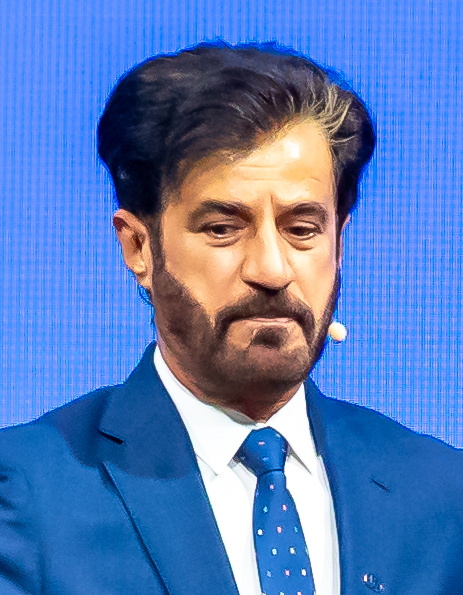
The context for the warning is unforgiving. Mohammed Ben Sulayem has already announced a 2030 V8 reset. The first month of 2026 racing has produced an emergency stakeholder review, a Lance Stroll quote calling the cars 'fake', a public Sainz safety complaint and now a sympathetic ADUO development lifeline for Honda and Audi. Anderson's view is that the underlying problem - too much demand, not enough harvest - is structural rather than political, and a 50kW shuffle does not fix structural problems.
The 2027 patch now goes to the FIA's World Motor Sport Council for sign-off. Whether teams have the data to push for a more aggressive rewrite by the time it gets there is the next question. If Anderson is right, the more interesting calculation is not whether F1 needs another engine review, but how soon.
The maths, in his framing, has not changed.