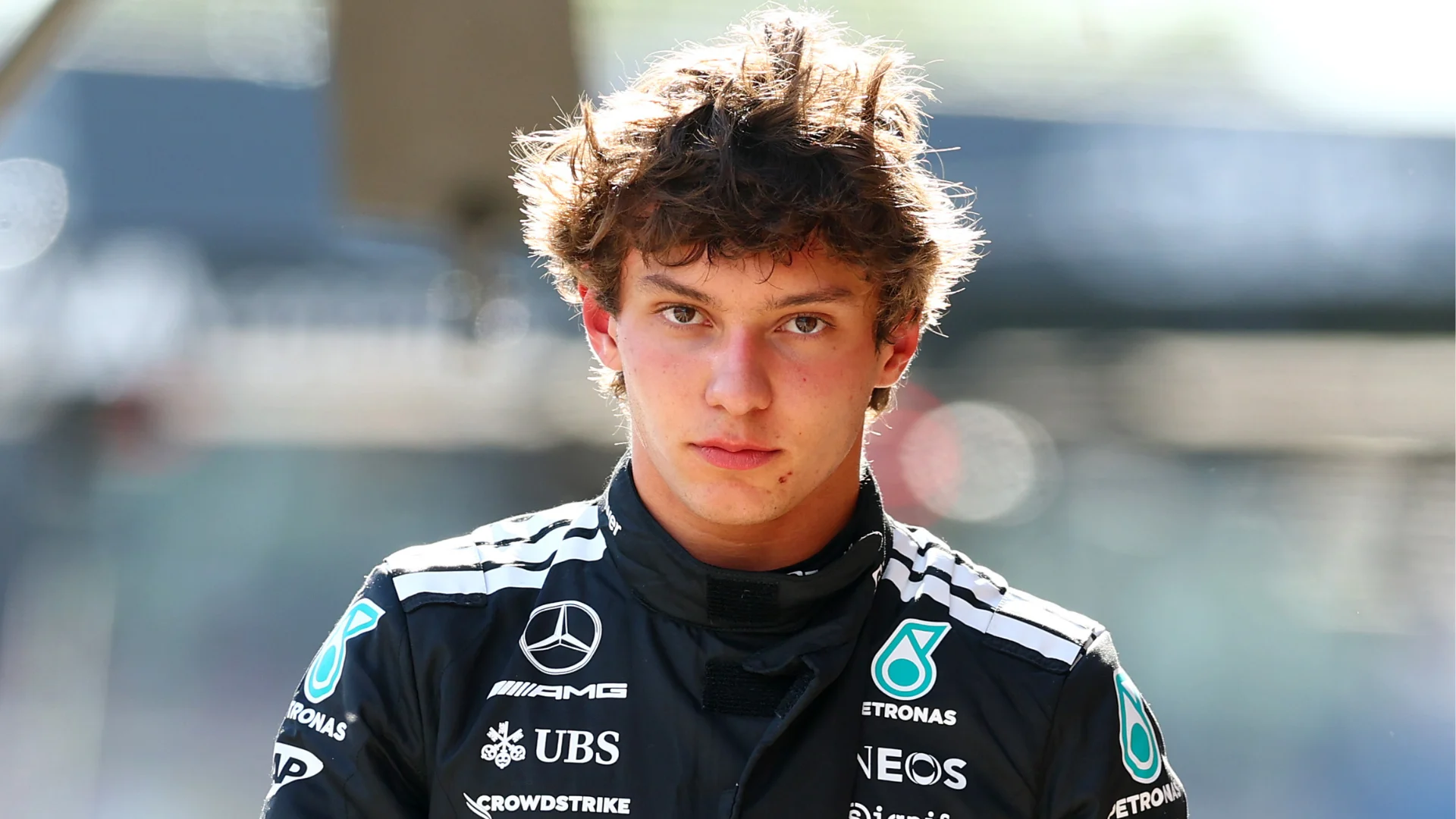
There is a particular shelf of the Formula 1 record book reserved for drivers who win three grands prix in a row. Until Sunday afternoon in Miami, that shelf had 22 names on it. Twenty of those drivers went on to be world champion. Kimi Antonelli is now the 23rd member - and on present form, the question is whether he becomes the 21st champion.
The statistic comes from a Formula 1 analysis published Saturday, dissecting the company Antonelli now keeps after victories in China, Japan and Miami. The list reads like a hall of fame: Alberto Ascari, Jim Clark, Jackie Stewart, Niki Lauda, Ayrton Senna, Michael Schumacher, Sebastian Vettel, Lewis Hamilton, Max Verstappen and the active duo of Antonelli and Oscar Piastri.
For a sense of scale, Verstappen holds the modern record: ten consecutive wins through 2023. Vettel won nine on the spin in 2013. Ascari's seven-race streak across the 1952 and 1953 seasons remains the longest run of the pre-hybrid era. Antonelli's three is, in that company, a starting point - but the conversion rate is what makes it interesting.
Only one driver in F1 history has put together three in a row and finished his career without a title: Stirling Moss, runner-up four times in the late 1950s and early 1960s, mostly because Juan Manuel Fangio was running the grid. Antonelli and Piastri are the only other names on the list yet to lift the trophy, and both are very much still active.
The Mercedes context strengthens rather than complicates the case. The W17 has now won at every circuit on the 2026 calendar, after Antonelli's hat-trick in Miami capped a near-flawless start to the season. The 19-year-old has converted poles into wins, defended hard against Lando Norris, and added 20 points to the championship gap on team-mate George Russell along the way.
There are reasons for caution. Toto Wolff has publicly conceded that race-start performance remains the team's 'weakest' 2026 trait. Antonelli's father told Italian press at Suzuka that 'it's difficult to beat George'. Mercedes' historical W14 era ran into mid-season tyre warm-up problems on circuits like Canada that the W17 has not yet faced. The FIA's in-season tweaks at Miami - and the further evolutionary changes pencilled in for 2027 - mean the technical envelope around the W17's strengths is moving.
Still, the underlying signal is hard to argue with. Three-race streaks in F1 do not happen by accident. They require a quick car, a quick driver, a strategy team that pulls fewer pit-wall mistakes than the field, and a working relationship between race engineer and driver that produces the same result on three different layouts. Antonelli has won at Shanghai's flowing high-energy combinations, Suzuka's high-commitment esses and Miami's stop-start street section - three quite different lap profiles - which is the spread you would expect from a title-bound combination rather than a one-track special.
The historical pattern is also strong on the timing of these streaks. Drivers who have hit three wins in a row early in the season have, more often than not, gone on to control the year. Vettel's 2013 streak came late and finished an already-decided season. Verstappen's 2023 sequence sealed a campaign he had already locked up. Antonelli's run is exactly the opposite: it has built the lead, not extended one.
The next three races - Canada, Spain and Monaco - will sit on top of the second wave of FIA technical changes, and on top of growing political noise around the FTM exhaust ban and the multi-team ownership review. Mercedes will not lead every weekend. But until someone breaks Antonelli's run, the simplest reading of the standings is the same one F1 published in its analysis: history says the title now usually follows the streak.
For Russell, Verstappen and Norris, the homework for May is straightforward. Stop the run.