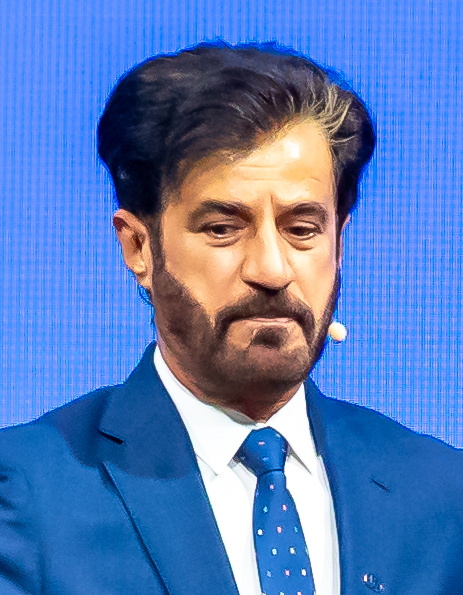
One of Formula 1's longest-running structural arguments has been pushed back into open debate this week, with FIA president Mohammed Ben Sulayem confirming a review of multi-team ownership and McLaren CEO Zak Brown calling for the practice to be banned outright.
The public framing came in remarks reported by Racing News 365 on Thursday, and it was deliberately blunt. 'I do believe that owning two is not the right way,' Ben Sulayem said. 'If we lose the sporting spirit, I believe that there will not be any more support for it.'
The statement does not, on its own, change anything. There is no proposed regulation, no draft framework and no specified team in the FIA's crosshairs. What it does is shift the political ground. Multi-team ownership has, for years, been a quiet feature of the championship - tolerated, navigated around, and discussed mostly in private. Ben Sulayem's intervention turns it into something the F1 Commission will now have to address on the record.
The single biggest case study is at Milton Keynes and Faenza. Red Bull GmbH has owned the senior Red Bull Racing operation and the Italian junior team - now Racing Bulls, formerly Toro Rosso, AlphaTauri and Scuderia Toro Rosso depending on the year - for more than two decades. The arrangement has survived every commercial era of the championship, including the Liberty Media takeover. The two teams vote separately on F1 Commission matters, share information through agreed firewalls, and operate from physically separate facilities. They also, as the summer 2025 Christian Horner removal showed, can move senior management between each other faster than any other team on the grid.
Laurent Mekies' move from the Faenza team principal role into the Red Bull senior seat within days of Horner's departure is exactly the kind of personnel mobility Brown points to when he argues the structure cannot be made fair on paper. McLaren cannot pluck a team principal from a sister operation and install them inside a week. Mercedes, Ferrari, Aston Martin and the rest of the field carry the same constraint. The argument is not that Red Bull behaves badly within the structure; the argument is that no other team has access to the structure at all.
'Co-ownership in today's day and age is prohibited in almost all, if not all, major forms of sport,' Brown said. 'It runs a real high risk of compromising the integrity of sporting fairness.'
The other ownership map the FIA will need to address is more recent. Otro Capital, the investment group with a 24 per cent stake in Alpine, has been reported in private discussions with Mercedes about a potential strategic position - a move that, if completed, would bring Toto Wolff's commercial reach into a second constructor. There is no signed deal. But the rumour is enough to give Ben Sulayem's review its second tailwind, alongside the Red Bull-Racing Bulls precedent.

Cadillac's arrival as the eleventh constructor in 2026 has added a further set of questions, particularly around engine alignment between General Motors-backed teams and the rest of the grid. None of those questions has yet been put to the F1 Commission in writing, but the political environment around them is clearly tightening.
The playbook from here is recognisable. Ben Sulayem has used the same approach for the 2030 V8 reset and the in-season ADUO revisions: announce a principle, allow the consequences to develop in slow motion, and use the threat of formal action as leverage in the underlying commercial discussion. There may not be a written rule on co-ownership for some time. There may, equally, not need to be one if the political atmosphere produces a voluntary unwind.
For the rest of the grid, the message is clear enough. The era of tolerated multi-team ownership in F1, if it is not over, is now under formal review. The next time a buyer turns up looking to take a stake in a second outfit, the answer will be a regulator's question first.