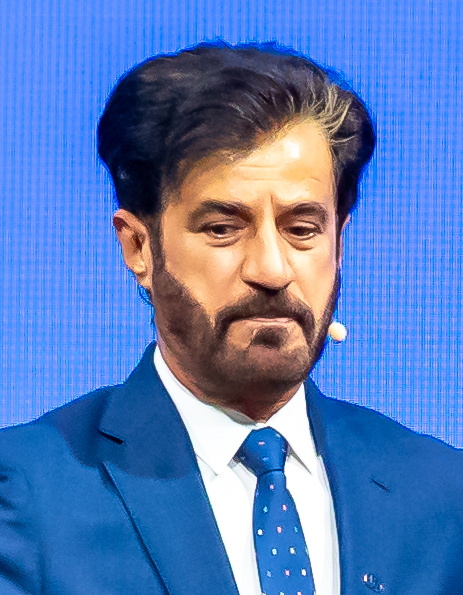
The V8 era of Formula 1 is being booked back in. After months of paddock chatter about whether the sport's beloved naturally-aspirated power units could ever return, FIA president Mohammed Ben Sulayem has stopped framing it as an idea and started framing it as a deadline.
In open comments about the future of F1's engines, Ben Sulayem set a year — and a regulatory mechanism to enforce it.
"I'm targeting 2030. One year before the maturity [of the regulations]. It will happen," he said.
That ends, in one sentence, a debate that has run since the 2026 hybrid rules were finalised. Those rules — which split power generation roughly evenly between a 1.6-litre V6 turbo and electric components — only began racing in March 2026. They have already drawn brutal feedback from drivers about lift-and-coast deployment, mid-race energy management, and the speed gulf between cars in different harvest states. Ben Sulayem's plan would cap the new rules at four full seasons before another fundamental rewrite.
He sees the change as inevitable.
"It's coming. Oh yes, it is coming. At the end of the day, it's a matter of time."
The most politically loaded part of his statement was about authority. F1 engine cycles have historically been shaped by the manufacturers, who have used their financial weight to shape — and at times stall — major regulatory shifts. Ben Sulayem says the FIA will not need their permission this time.
"In 2031, the FIA will have the power to do it, without any votes from the PUMs," he said, referring to the power unit manufacturers.
The technical concept is also a sharp pivot. The current 2026 architecture pushes the electric portion of the power unit to roughly half of total output. Ben Sulayem's V8 vision goes the other way.
"It will be with a very, very minor electrification, but the main one will be the engine."
He framed the format as a return to road-relevant DNA, pointing to the manufacturers still building V8s for production sports cars.
"The V8, you see it [in road cars] with Ferrari, Mercedes, Audi, Cadillac... lightweight car."
His read of the room is that the engine suppliers are not blocking the move.
"They want it to happen... V8 is coming."
The implications are not symmetrical across the grid. Audi has only just entered F1 with a programme designed entirely around the new hybrid rules. Honda's renewed Red Bull partnership from 2026 is also built around the new electrified specification. A 2030 reset to lightly-electrified V8s would force every supplier into a decision: invest again, or walk away.
For the moment, though, the FIA's position is publicly fixed. The 2026 hybrid era now has an end date, and Ben Sulayem has named the engine he plans to put in its place.