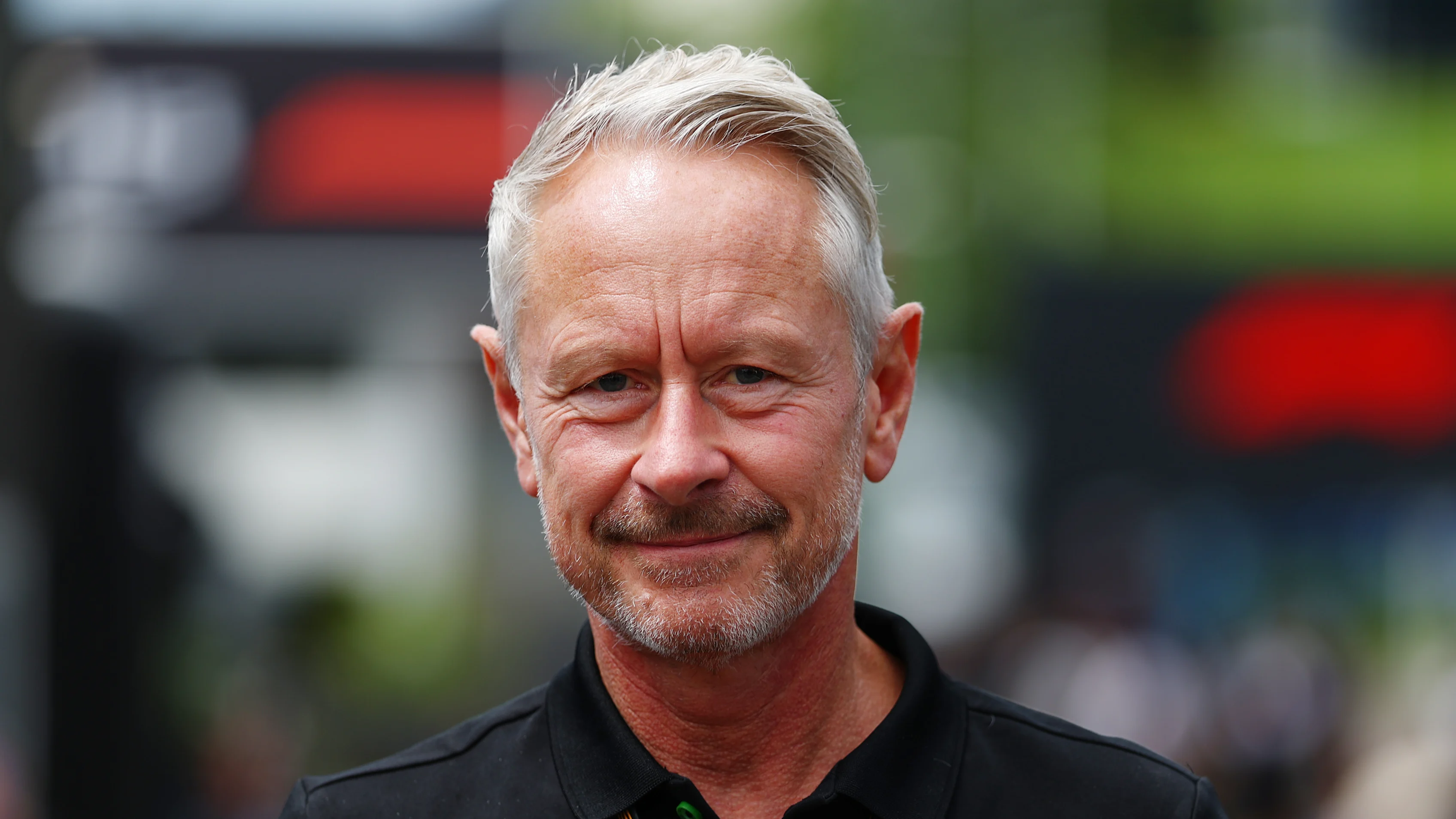
The structural challenge of being a brand-new works manufacturer in the 2026 power unit era is no longer abstract. Audi team principal Jonathan Wheatley has put a number on it - and the number is four to one.
Speaking in the Saudi Arabian Grand Prix paddock, Wheatley laid out the data deficit Audi faces relative to Mercedes, who supply both Williams and McLaren on top of their works team and effectively run the largest in-cycle engine fleet on the grid.
"You know, we're, as a PU manufacturer, we only have two cars with an Audi PU in them," Wheatley said. "And Mercedes have eight cars. They're learning at a much faster rate as well. So we're not under any illusions about that."

The implication is significant. In a regulation cycle defined by deployment maps, battery cycle behaviour and recovery harvesting, every kilometre of running matters. Mercedes runs 1,200 km of race-weekend data per round across its eight cars; Audi runs 300. Multiply that by 24 races, and the seasonal data gap is enormous.
Wheatley was equally direct about Audi's competitive standing. There is no spin in his early-season language - just acknowledgement of the work to come.
"It won't come as a surprise to anyone - it's a brand new chassis, brand new power unit. We've got some areas to make up. I think especially our focus at the moment is on the powertrain side," he said.
That alignment of words and reality is, in some ways, the more instructive part of Wheatley's debut as Audi TP. The team has been pulled from the Sauber operational structure, retooled around a Hinwil-Neuburg axis, and asked to deliver in a year where every other established team has had two seasons of preparation for the new regulations. Wheatley is not pretending the timeline is comfortable.

What softened his commentary was the conversation about the driver line-up. Audi's decision to retain Gabriel Bortoletto for a second season alongside Nico Hulkenberg has, in his view, started to pay off in granular ways.
"Firstly, I've been encouraged with both drivers over the winter," Wheatley said. "Recharging, coming back fully focused, and absolutely embedded with their engineers, looking at every single detail."
The phrase "embedded with their engineers" is the kind of small-team praise that signals more than it says. Inside an F1 operation, it means drivers who are doing the slow work - debrief discipline, simulator correlation, feedback structure - that turns a year-two driver into a contender by year three. That is exactly the curve Audi needs Bortoletto on.
The picture Wheatley left in Jeddah was less one of complaint than of patience. Audi knows where it sits, knows the gap, and knows the only path is mileage, structure and discipline. The eight-versus-two data scoreboard he flagged on Sunday is a long-term problem, not a short-term one - but in calling it out publicly, Wheatley made clear his team understands exactly what mountain it is climbing.