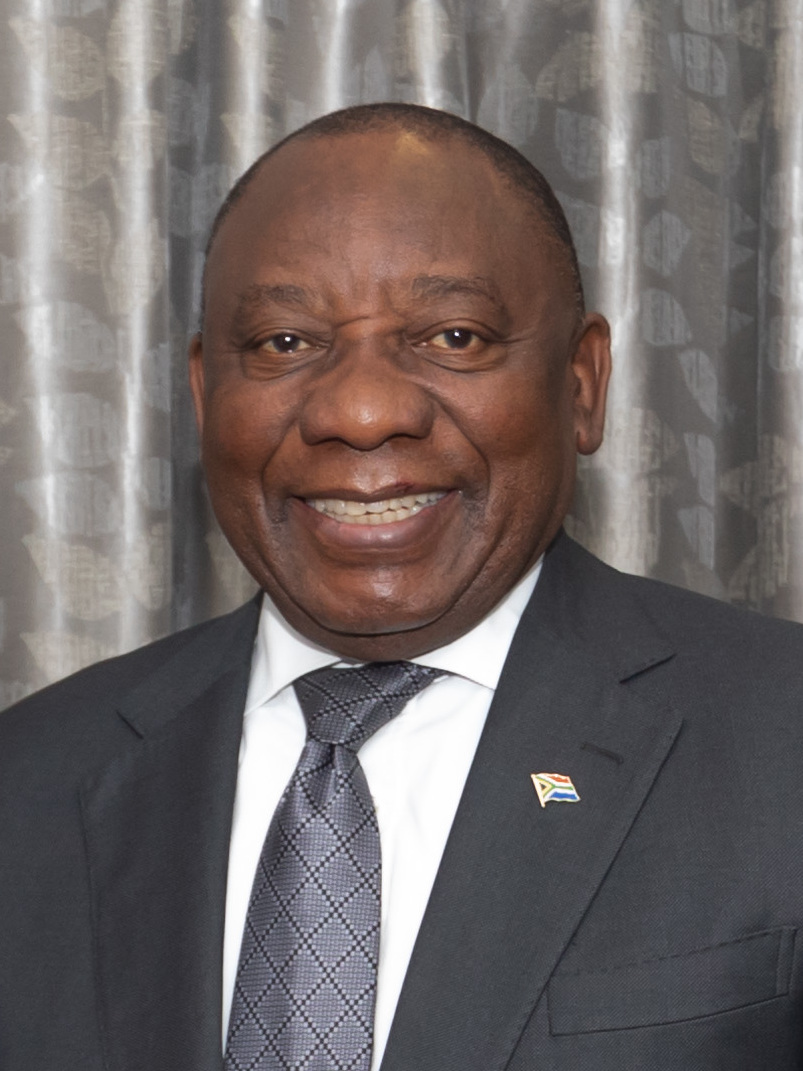
South Africa's campaign to bring Formula 1 back to Kyalami after more than three decades has just acquired its highest-ranking ambassador. Sports minister Gayton McKenzie has confirmed that President Cyril Ramaphosa will personally attend a grand prix in 2026, framing the trip as a state-level diplomatic offensive aimed at Liberty Media.
McKenzie's announcement, made on 6 May, set the tone for the rest of the African calendar conversation.
"His Excellency President Cyril Ramaphosa has agreed to join me at a Formula 1 Grand Prix later this year," he said. "This is a working visit, not a social one."
The minister was unambiguous about the purpose of the visit. "The President's visit will allow us to observe, engage and strengthen our case," McKenzie said.
The bid's emotional argument has been well-rehearsed for months, and McKenzie restated it. "An entire generation of young African motorsport enthusiasts has never seen a Formula 1 race in their own backyard," he said. "We intend to change that."
The target circuit, Kyalami, last hosted a championship grand prix in 1993 and has already received FIA approval for a Grade 1 status upgrade — clearing the most pressing technical hurdle. Track operator Toby Venter has spent close to a decade preparing the facility for an F1 return, and the FIA sign-off effectively eliminates the easy excuses Liberty might once have leaned on.
What South Africa now has to manage is competition. Rwanda has been openly courting F1 since 2023, with President Paul Kagame deploying his own head-of-state strategy and pitching a purpose-built circuit. Morocco's bid is more recent but leverages established North African motorsport infrastructure and easier European logistics. F1 chief executive Stefano Domenicali has welcomed all three approaches without committing to any of them, and he has been careful to manage expectations on timing.
Domenicali has previously confirmed that discussions with multiple African candidates are ongoing, although he warned that a deal is unlikely in the immediate future. The 2026 calendar, already squeezed by the loss of two Middle East rounds and ongoing Spanish restructuring, is unlikely to absorb a new race before 2027 at the earliest.
That is what makes the Ramaphosa visit a tactical move rather than a deal-closer. McKenzie is not pretending this is the moment Liberty signs anything. He is positioning Pretoria so that when the inevitable choice between the three African bids is made, the South African submission lands on Domenicali's desk with a presidential signature attached.
The optics matter. South Africa has previously been criticised for treating its F1 bid as a purely commercial proposition, with most public engagement coming from McKenzie himself or from Kyalami operator Venter. A Ramaphosa appearance reframes the conversation as a national project, not a sports-business one — and that distinction is exactly the framing Liberty has signalled it wants to see from any African host.
For Liberty, the broader calculation goes well beyond any single bid. Africa, with more than a billion people and no race on the F1 calendar, has been openly described by the championship as a moral and commercial inevitability. The choice of host nation will set the tone for what kind of F1 the continent gets. South Africa offers heritage and a proven circuit. Rwanda offers a clean slate and an aggressive sponsor pipeline. Morocco offers proximity to European logistics.
What South Africa now uniquely offers is a sitting president walking the paddock alongside Domenicali — and a sports minister who has no intention of letting the conversation drift back to the rumour mill.